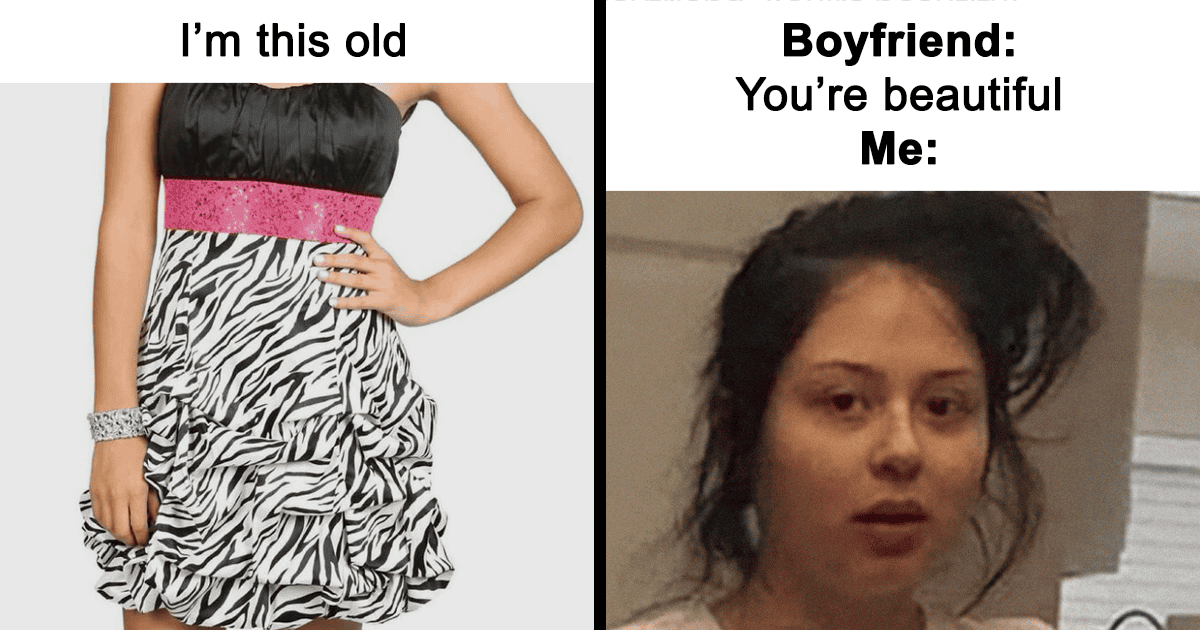

When someone texts us “How are you?”, we usually reply with either something very laconic or an entire novella. Both of these choices have their pluses and minuses, but there’s another way to express your current state, and it’s often way more effective, too. Memes! And the Facebook page ‘I Be Like‘ has one for virtually any occasion. From work and dating to online shopping and eating out, this fun social media project has been covering everyday life since 2012. So free up some space on your device and keep scrolling—there’s plenty of hilariously relatable pictures that you can save for later use.
#1

#2

While these memes might seem silly and pretty straightforward, learning how to relate to others isn’t.
According to the authors of Relationship Sanity, Mark B. Borg, Jr., Ph.D., Grant H. Brenner, and MD, Daniel Berry, RN, MHA, it involves attention to a variety of vocabularies—verbal, behavioral, and affective.
“Lessons on how to relate are likely, then, to be mixed, conflicted and confusing,” they explained. So the fact that we can perfect it to the point where a single image is enough to convey complex emotions is absolutely remarkable, if you ask me.
#3

#4

#5

The authors say that compassionate empathy is what allows the development of this kind of connection. They define it as allowing someone else’s feelings and needs to inhabit our consciousness without taking over completely.
“It promotes ongoing health in a relationship and even provides an environment and mechanism for ‘fixing’ relationships that have gone awry,” they said.
#6

#7

#8

#9

Sometimes we may unconsciously create patterns of relating that distance us from people—patterns that “protect” us from what we think we want from a relationship, namely mutual emotional investment and intimacy.
This kind of mutuality can be frightening when we realize how emotionally vulnerable it makes us. The authors call this “distancing” technique an “irrelationship.”
#10

#11

#12

#13

“Irrelationship, a dissociative adaptation, is a shared coping style which allows us to distance ourselves from the anxiety related to becoming close to others,” they said.
“This is accomplished through a process called enactment, a habitual (but usually unconscious) acting out of behaviors intended to prevent awareness of distressing feelings.”
These jointly enacted behaviors, which the authors call song-and-dance-routines, stand directly in the way of resolving distress by reproducing negative experiences as well as delaying the development of new ways of relating.
#14

#15

#16

#17

#18

#19

#20

#21

#22

#23

#24

#25

#26

#27

#28

#29

#30

#31

#32

#33

#34

#35

#36

#37

#38

#39

#40

#41

#42

#43

#44

#45

#46

#47

#48

#49

#50
