
They say that the apple doesn’t fall far from the tree. But what if the apple doesn’t just fall nowhere near the tree, but does everything to roll in the opposite direction? Because the truth is not all kids want to be mirror images of their parents, and when they grow up, they often want to be nothing like their mom and dad.
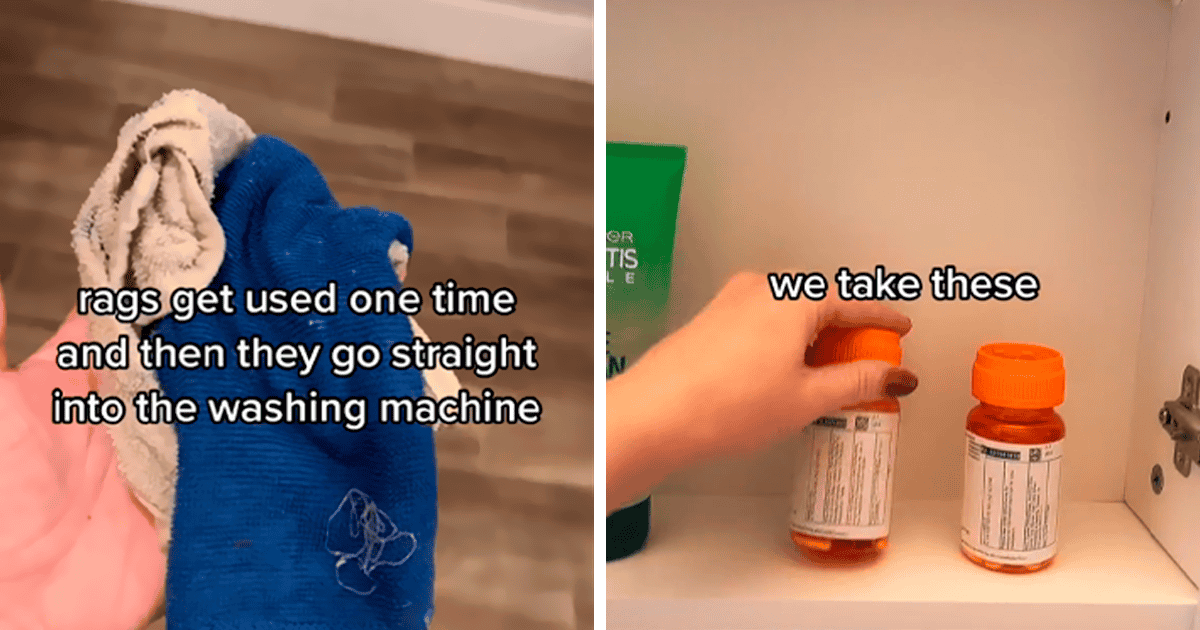
Speaking of moms, there is a TikTok creator who runs her hugely popular channel “Not Like My Mother.” With a whopping 8.2 million total likes, the TikToker Meesh has won hearts just by sharing hilariously accurate and painfully relatable videos in a series with the same name–Not Like My Mother.
“Healing with humor & new habits,” the description of Meesh’s TikTok channel says, adding that it’s “100% satire” and “100% truth.” Scroll down to see how the creator does everything not to copy her mother in various situations and walks of life, which will surely ring a bell to many of you there!
#1

In order to find out what are the reasons why adult children don’t want to be like their parents, We reached out to Emily Malamet, a clinical psychologist and psychotherapist from Paris Psychology Centre, who shared some very interesting insights.
Malamet told us that it can surely happen that certain adult children don’t want to behave like their parents. “It is possible that adult children had witnessed certain parental behaviors growing up that they didn’t appreciate or were harmful to their wellbeing or that of their family, and don’t want to recreate this in their own lives/or as future parents,” the clinical psychologist said.
#2

#3

Moreover, certain individuals are afraid to be like their parents or engage in similar behaviors, Malamet said. “For some, early experiences with parental figures can leave emotional wounds, which are feelings which we were particularly sensitive to as children that may be easily triggered by others in the present.”
Malamet explained that it is important for these individuals to work on being sensitive to experiences they may be triggered by, what others do that can trigger these reactions, and let those close to them know about it. “This is implies being assertive and letting others know what they may need. By doing what they couldn’t do as a child, they can work on repairing these old emotional wounds.”
#4

#5

#6

When asked what are the reasons why some grown-up children decide to cut off their parents, Malamet said that there are many of them, but the most common reasons are (but are not limited to): “abuse and neglect during childhood, difference in opinions, having previously felt controlled by their parents, perceived lack of support, having been put in unsafe environments by their parents growing up, high expectations from their parents, mental health issues (being experienced by the adult child or their parent), traumatic events experienced with their parents growing up, parental divorce, or favoritism towards one child in the family,” the clinical psychologist concluded.
#7

#8

#9

As the generations progress, it’s natural for adults to want to separate themselves from their parents. With the ever-changing world, it’s difficult for adults to stay connected with their parents’ values and experiences.
Adults today are faced with a unique set of challenges that are vastly different from their parents’ experiences. This can make it difficult to relate to their parents, and it can also create a sense of disconnect when it comes to values and beliefs.
Just think of how much technology and the internet changed the way we communicate, learn, and work. Meanwhile, the job market has shifted, with many jobs that didn’t exist when their parents were young. This means that the methods of achieving success and finding fulfillment can be vastly different from what their parents experienced.
#10

#11

#12

The desire for adults to separate themselves from their parents may be also driven by the idea of personal growth. Many adults want to create their own paths and avoid following in their parents’ footsteps. They don’t want to be limited by their parents’ expectations and beliefs, and they want to explore their own interests and passions.
Moreover, adults today may feel a sense of responsibility to make a difference in the world. They may feel a pressure to use their skills and resources to address the issues facing the world today, and this may lead them to create their own version of success.
A growing number of studies also show that adults today more often cut ties with their parents than ever before. A study in 1997 explored family relationships in later life and found that 7 percent of adult children had cut ties with their mother and 27 percent with their father. Meanwhile, in 2020, a study by sociologist Karl Pillemar showed that 1 in 4 Americans are estranged from their families—roughly 67 million people.
#13

#14

#15

#16

#17

#18

#19

#20

#21

#22

#23

#24

#25

#26

#27

#28

#29
