
At all times, designers ought to ask themselves if their products and services are solving problems and if the people on ‘the other side’ (i.e. the customers) are going to like what they do. Great design is usually instinctively obvious to us. We know it when we see it! However, what’s not as clear is knowing when things can be significantly improved. Sometimes, we’re simply not aware that there are everyday problems to be solved, whatever we do.
Some designers embrace their creativity to the max and go the extra mile to make things better and more convenient for the people around them. Our team here at We has gathered some of the most impressive examples of genius solutions to everyday problems to show you that we all deserve to live in a world full of quality design. We shouldn’t have to settle for less! Scroll down for a glimpse of what that looks like.
We wanted to learn more about how product designers can figure out their customers’ current and future needs, so we got in touch with marketing psychology speaker Matt Johnson, Ph.D. He was kind enough to answer our questions in detail. Read on for our full interview.
#1 The Local Nursing Home Is An Indoor Town. There’s A Movie Theater And Pub

Marketing psychology speaker Johnson, who is the host of the branding and human nature blogs, explained to We that understanding customers’ real needs without relying on mere guesswork is an age-old problem with no silver bullets. At the end of the day, product designers need to embrace a holistic approach to move past assumptions.
“Firstly, direct engagement with users is crucial. Conducting surveys, interviews, and usability tests can reveal insights into customers’ preferences, pain points, and behaviors. This approach allows designers to empathize with users, gaining a deeper understanding of their needs and desires,” Johnson told We via email.
#2 There Is A Free “Period Pack” At My School For Girls Who Are Unprepared For Their Periods

#3 The Ingredients Section On This Toothpaste Tube Explains Where Each Ingredient Comes From And What It Does

“Secondly, analyzing data from various sources can provide valuable insights. This includes user feedback, analytics, and market research. By combining qualitative and quantitative data, designers can identify patterns and trends, informing their design decisions.”
He continued: “Lastly, collaboration with cross-functional teams, including marketers, engineers, and customer service representatives, can provide diverse perspectives and ensure that designs meet both customer needs and business goals.” According to Johnson, these strategies will allow designers to come up with solutions that will resonate with their customers on a deeper level.
“While there’s no guarantee that a product will be successful once it reaches the market, these steps can ensure that the product has the best possible chance of success,” he said.
#4 The Way These Trays At My University Fit On The Table

#5 These Lines Painted On The Wall So You Can See You’re In The Spot

#6 My Sink Sprayer Has A Tough Spot Remover. It Shoots A High-Pressure Stream Down The Middle That Is Surprisingly Powerful, But A Cone Of Water Around It Blocks All The Splashes

Johnson explained to We that anticipating the future needs of customers requires a blend of foresight, creativity, and a deep understanding of human behavior. “Designers and companies can start by closely monitoring trends in technology, society, and culture. By staying abreast of emerging technologies and societal shifts, they can predict how these changes might impact customer needs,” he said.
“Additionally, fostering a culture of innovation within the organization is crucial. Encouraging employees to think creatively and explore new ideas can lead to innovative solutions that anticipate future needs. This can be facilitated through brainstorming sessions, hackathons, or by dedicating resources to research and development,” Johnson had some practical advice for company leaders to keep in mind.
On top of that, the marketing psychology speaker suggested opting for a customer-centric focus to keep designs relevant and impactful. “Collaborating with customers and gathering feedback in a continuous loop can provide valuable insights into evolving needs and preferences.”
#7 My Oven Shows The Time That You Started Cooking In Case You Didn’t Set A Timer

#8 This Local Shop Gives Old Vegetables For Free So You Can Feed Your Pets

#9 Toothbrush With Replaceable Bristles So You Don’t Have To Keep Buying A New Handle

Johnson noted that anticipating future needs comes down to having a proactive and adaptive mindset. “By combining strategic foresight with a willingness to experiment and iterate, designers and companies can stay ahead of the curve and deliver innovative solutions that meet the evolving needs of their customers.”
This sort of approach is market-driven, where companies try to understand and anticipate the needs of their target market. However, this isn’t the only methodology, Johnson said. Another approach is being a market-driving force.
“Here, the company doesn’t listen to what the customer wants, but rather, it TELLS them what they should want. Brands who take this approach are often found in the luxury market (especially luxury fashion), and in highly innovative companies such as Apple (especially with the iPhone).”
For some more deep-dives into the world of marketing, feel free to read Johnson’s posts about the pitfalls of audience capture and the psychology of market-driven music on his blog. “While so many industries are focused on serving the needs of their target market, there’s also a significant risk of audience capture, whereby the preferences of the market shape the creators themselves—often profoundly,” he told us.
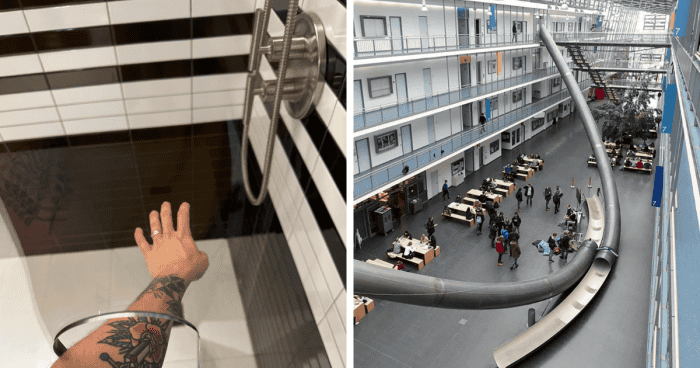
#10 In Case You Don’t Feel Like Taking The Elevator, The Technical University In Munich Has A Slide On The 4th Floor

#11 These Meat Labels React To Ammonia, A By-Product Of Meat Spoilage. Once It Turns Completely Blue, The Barcode Can No Longer Be Scanned

#12 Mall Restroom In Tokyo Has A Holder To Put Your Baby In While You Use The Stall

Ideally, quality design should be centered on finding the balance between two things: function and form. To put it very simply, as a designer, you want to create an end product that does what it’s supposed to do and also has great aesthetics. In short, if something works flawlessly and looks great, then you’ve done your job extremely well.
Meanwhile, if you do a better design job than your competitors, then you’ve stood out from the crowd. Cue the endless accolades, profits, and applause! However, focusing on function or form alone can backfire. If you’re honing in on either aspect of design at the expense of the other, you’re putting yourself at a disadvantage. What you want to aim for is creating a holistic experience for your clients.
#13 Miniature Traffic Playground In Copenhagen Where Kids Learn To Bike In Traffic

#14 My Local Park Has A Wheelchair Accessible Swing

#15 These Have Been Popping Up All Around My Town

If you focus on function alone, then you risk your design getting lost in the crowd. Even if something performs quite well, your potential customers might not want to buy it if it looks ugly or if your competitors created products that are easier on the eyes.
On the other hand, if you go all-in on cool aesthetics, you also risk pushing your customers away and damaging your reputation.
To put it bluntly, things need to do what they’re supposed to do. Yes, beauty has merit. But that’s why we create and buy art. Products lacking functionality should not masquerade as something more. It’s all fine and well that designers understand the importance of beauty.
However, they should avoid putting their artistic vision on a pedestal.
#16 The Middle Snap On My Baby’s Onesie Is A Different Color To Help Align The Buttons

#17 This Papaya Has An “Eating Color” Sticker To Let You Know When It’s Ripe

#18 My Local Library Has Cake Pans Available To Check Out

If some aesthetic aspects of the design get in the way of its functionality, it might be time to go back to the drawing board. Similarly, you need to rethink things, as well, if your super-functional product looks worse than what your competitors have put out. Products that aren’t ergonomic or easy to understand and put the customers’ convenience in last place should be reworked.
It’s far easier to market products and design solutions when they solve problems and look great.
When it comes to innovation, however, things get tough. It is difficult enough to genuinely get to grips with what your target customers want and need right now. It’s even harder to anticipate how those wants and needs might change in the near future. It takes a lot of creativity, hard work, and empathy for product designers to accurately guess what the future might hold.
#19 This Shirt Has A Microfiber Lens Cloth Sewn Into It

#20 In Singapore, Senior Citizens And People With Disabilities Can Tap A Card To Get Extra Time Crossing The Street

#21 I Found The Best Ever Pencils. After Using Them, You Can Plant The Pencil’s Green Bottom In The Soil And Then A Sapling Will Grow

Anticipating future needs so you know how to adapt your designs comes down to doing a lot of research and then extrapolating from that. First of all, you want to see what your biggest competitors in the market are getting right.
A vital part of business and design is being aware of what your contemporaries are doing, as well as what market trends are in vogue.
#22 Projected Markings In Oulu, Finland, When Snow Covers The Ones Painted On The Street

#23 This Airport In Cleveland, Ohio, Has A Station Where You Can Learn CPR For Free

#24 It Can Be So Easy To Make People’s Lives Easier

Second, you want to directly engage with your customer base. There’s nothing like directly asking someone how you can improve their experience. However, you can’t take everything you hear at face value.
Sometimes, people aren’t even aware of how their lives can be improved. So you need to find ways of figuring out their deeper needs (e.g. saving time, being safer, having more convenience) and how you can meet them.
#25 I Ordered Some Sample Colors For My New Blinds, And They Sent Me An Actual Tiny Little Blinds

#26 Cool Bike Repair Equipment On A Bike Path

#27 This Shirt Has Buttons On The Inside That Prevents Gaps In The Shirt

Thirdly, creating good design comes down to testing, editing, and trying out different variations of your ideas. You need to—time and time again—try to bridge the gap between what you’re offering your customers right now and what they should ideally be getting in the future that even your competitors can’t provide.
From our perspective, true innovation is an act of profound empathy. It proves that the brilliant people behind the designs can get into the minds and hearts of others.
#28 The Golf Balls At The Mini Golf On This Pier Are Biodegradable And Fall Into The Sea At The 18th Hole

#29 These Glowing Door Handle Stickers In Case The Power Goes Out When You’re In The Bathroom

#30 My Local Library Has “Binge Boxes” In The Film Section

Which of the genius solutions featured in this list awed you the most, Pandas? Were there any that you were genuinely shocked to see? Were there ideas that you think you would have come up with yourselves? What everyday problems do you wish could be solved right now?
We’d love to hear your thoughts on the topic, so if you have a moment, share them in the comments!
#31 I Found Band-Aids For Different Skin Tones At Target

#32 This Airplane Seat Has A Step To Help Short People Reach The Overhead Locker

#33 These Small Tents In A Store, To See What They Would Look Like In Full-Size

#34 The Local Supermarket Has Its Own “Farm” Where They Grow Different Types Of Salads And Other Vegetables

#35 This Pump Bottle Is Designed For You To Get As Much Out Of It As Possible

#36 My Local Playground Has A Communication Board So Kids Can Interact And Play If They Are Deaf Or Can’t Speak The Language

#37 This Airport Has A Bathroom For Service Animals

#38 These Shopping Carts Have A Compartment For Pets

#39 This Tire Has A Tread Depth Measuring Built Into The Rubber

#40 My Town Has A Bike Pump Permanently Installed Next To The Bike Lock-Up Area

#41 The Stalls At This Airport Have Green/Red Lights To Indicate If They’re In Use Or Not

#42 This Toilet Has A Separate Door For Children

#43 This Sushi Restaurant Has Two Different Soaps For Before And After Eating

#44 The Grocery Store I Went To Earlier Had A Special Escalator For Your Shopping Carts

#45 This Sticker Lets The Person Receiving This Cargo Know How Many Degrees It Was Tilted Based On Where The Green Beads Are

#46 The Local Blood Bank Has These Signs To Show How Much Blood They Have

#47 They Have A Bench With A USB Port At A Train Station In Rural France

#48 My Gym’s Vending Machine Organizes Water Based On Its Temperature

#49 The Door Knob Is Higher At The Doctor’s Office To Prevent Kids From Escaping

#50 This Allows You To Turn The Water On From The Outside So It Can Heat Up Without Splashing You With Cold Water
