
Finding a job is a tough task. You seem to send endless streams of resumes and cover letters to get at least a few interviews. And even when all of this goes smoothly, there might still be stuff that comes up and ruins it all.
Today’s story is a perfect example of this. In it, the person went through the whole process of getting a nice job with adequate pay. Sadly, it all went away quickly when it was revealed that the company wasn’t keeping its promises.
More info: Reddit
Getting a job is a tough task that takes a long time, and even after all that effort, it can end up being fruitless

Image credits: Los Muertos Crew (not the actual photo)
A person who applied was interviewed for a job that promised to pay the highest salary in their offered range


Image credits: Tima Miroshnichenko (not the actual photo)
But then, when the company offered them a job, they told them that they would pay only the lowest amount


Image credits: u/QueensOfTheThrownAge
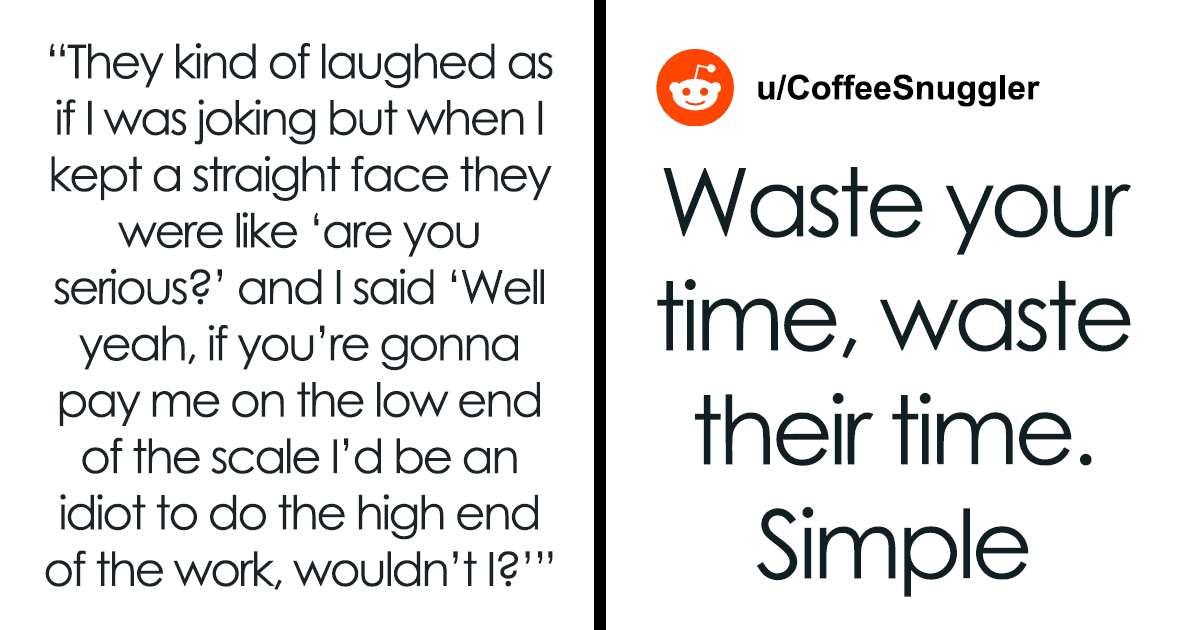
So, instead of letting the company lowball them, the person said that if they’re going to get a low salary, they’re going to put little effort into the job
Today’s OP applied for a great-sounding job. This job’s posting specified what kind of salary they would offer candidates. The original poster didn’t specifically mention exact numbers — instead, they dubbed it in the $X-Y range.
Nowadays, more and more places are legally requiring employers to provide information about salaries in job postings. For example, in The European Union’s Pay Transparency Act, there’s a point about pay transparency for job-seekers. It demands that employers provide information about the initial pay level or its range in the job description or at least before the job interview.
Staying compliant with the legal requirements isn’t the only benefit of including a salary in the job description. This type of transparency helps the company to appear more transparent, strengthen its trustworthiness, and empower progress toward pay equality.
Also, as this survey reveals, many people don’t even apply for jobs if the salary isn’t disclosed. As it was pointed out in the comments under the post, people value their time, meaning they don’t want to go through the whole application process only to learn that the company is paying too little.
Just as The European Union’s Pay Transparency Act requires employers to declare their salary information, it also doesn’t let them ask job candidates about their pay history. Yet, it doesn’t ban employers from asking about candidates’ salary expectations.
Some say that this question is one of the hardest to answer during job interviews. If a candidate says a number that is too small, they might end up making less than the company was willing to pay. And if they go too high, they can price themselves out of the job.
During their phone interview, the OP was asked this difficult question. They gave their response and were promised to be paid the largest amount of the offered range if they passed the interview process. For this to happen, they were invited to an in-person interview, during which they were offered a job. But that wasn’t the end.

Image credits: fauxels (not the actual photo)
Apparently, the company wasn’t planning to keep their promise. Instead of the highest amount in their range, they offered the lowest one. Their justification was that it was the only amount that fit the OP’s experience level.
But the author wasn’t planning to let the company lowball them. They brought up the fact that it wasn’t the amount they were promised. They also cheekily added that if the company is planning to pay a low salary, they will put little effort into the job. You know, in the ballpark of treating others how you want to be treated.
At first, the recruiter took it as a joke, but they soon realized that the original poster wasn’t joking. It’s no surprise that the interview didn’t go much further.
Even though they didn’t get the job, the author was able to see a silver lining in the whole situation. They felt like they gave “those LinkedIn weirdos” a dose of reality. People on Reddit agreed with this sentiment. They found the idea of “minimum pay, minimum effort” quite an ingenious way of negotiating. After all, negotiation is probably the best way to avoid getting lowballed on the pay you want.
Well, it’s sad that the OP didn’t get the nice job. On the other hand, maybe they dodged a bullet by refusing to work for a company that tends to trick people. And who knows, hopefully, with time, another job offer from a better company will come along.
People online praised the person for not letting a scammy company walk all over them


Image credits: Sora Shimazaki (not the actual photo)


Image credits: Christina Morillo (not the actual photo)


